Everybody wants a fair price.
Nobody wants to overpay for a paint job.
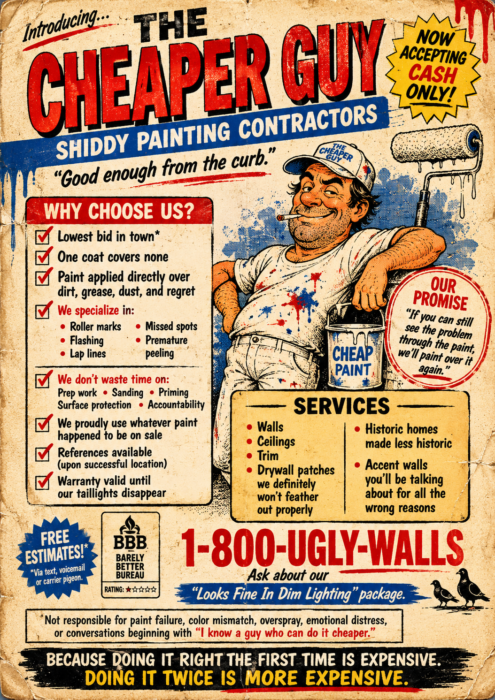
But there’s a big difference between finding value and hiring the cheapest painter you can find.
We’ve seen plenty of homeowners save a few hundred dollars upfront only to spend thousands fixing the results later.
Cheap Paint Jobs Fail Fast
Not always.
But often.
Because the easiest way to lower a painting estimate is to remove the things homeowners don’t immediately see.
Prep work.
Primer.
Repairs.
Quality materials.
Time.
Those are usually the first things to go.
The problem is that those are also the things that make a paint job last.
Paint Doesn’t Hide Problems
It highlights them.
That crack in the wall?
You’ll notice it more after it’s painted.
That rough drywall patch?
The paint will help you find it.
That peeling caulk?
It’s still peeling.
Just a different color now.
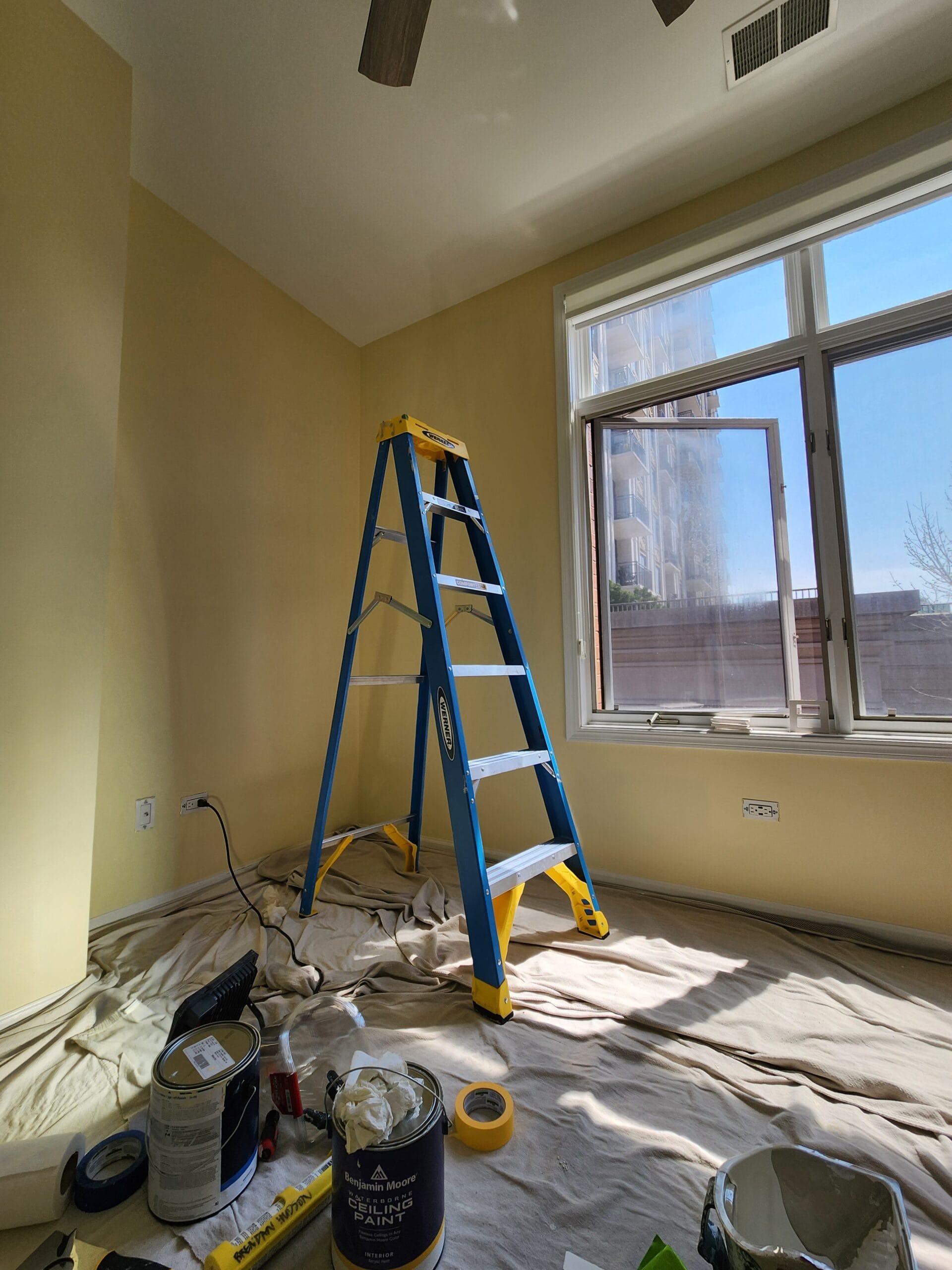
A good painter spends a surprising amount of time preparing surfaces before the first can is opened.
A cheap painter usually can’t afford to.
The Most Expensive Part Isn’t the Paint
It’s the labor.
That’s why professional painters spend so much time talking about preparation.
The difference between a paint job that lasts two years and one that lasts ten years usually isn’t another gallon of paint.
It’s the work that happened beforehand.
Bad Paint Jobs Are Expensive to Fix
This is where things get painful.
A roller mark happens in seconds.
Fixing it can take hours.
A bad patch takes minutes to create.
Making it disappear takes skill.
When homeowners hire us to correct a failed paint job, they’re paying for the original paint job and the repair.
That’s a tough lesson.
Why Estimates Can Vary So Much
If you’ve ever received three painting estimates and wondered why they’re so different, this is usually the reason.
One contractor is pricing the finished result.
Another is pricing the fastest path to getting paint on the wall.
Those are not the same thing.
The Cheapest Bid Isn’t Always the Cheapest Job
When comparing estimates, ask:
- What’s included?
- What prep work is being done?
- What products are being used?
- Is the contractor insured?
- Is there a warranty?
Those answers tell you far more than the final number.
The Bottom Line
We’re not saying the most expensive painter is always the best.
They’re not.
But the cheapest estimate deserves extra scrutiny.
Because in painting, shortcuts have a habit of showing up later.
Usually after the painter is gone.
And usually when fixing them costs more than doing it right the first time.